Petrol Price Today
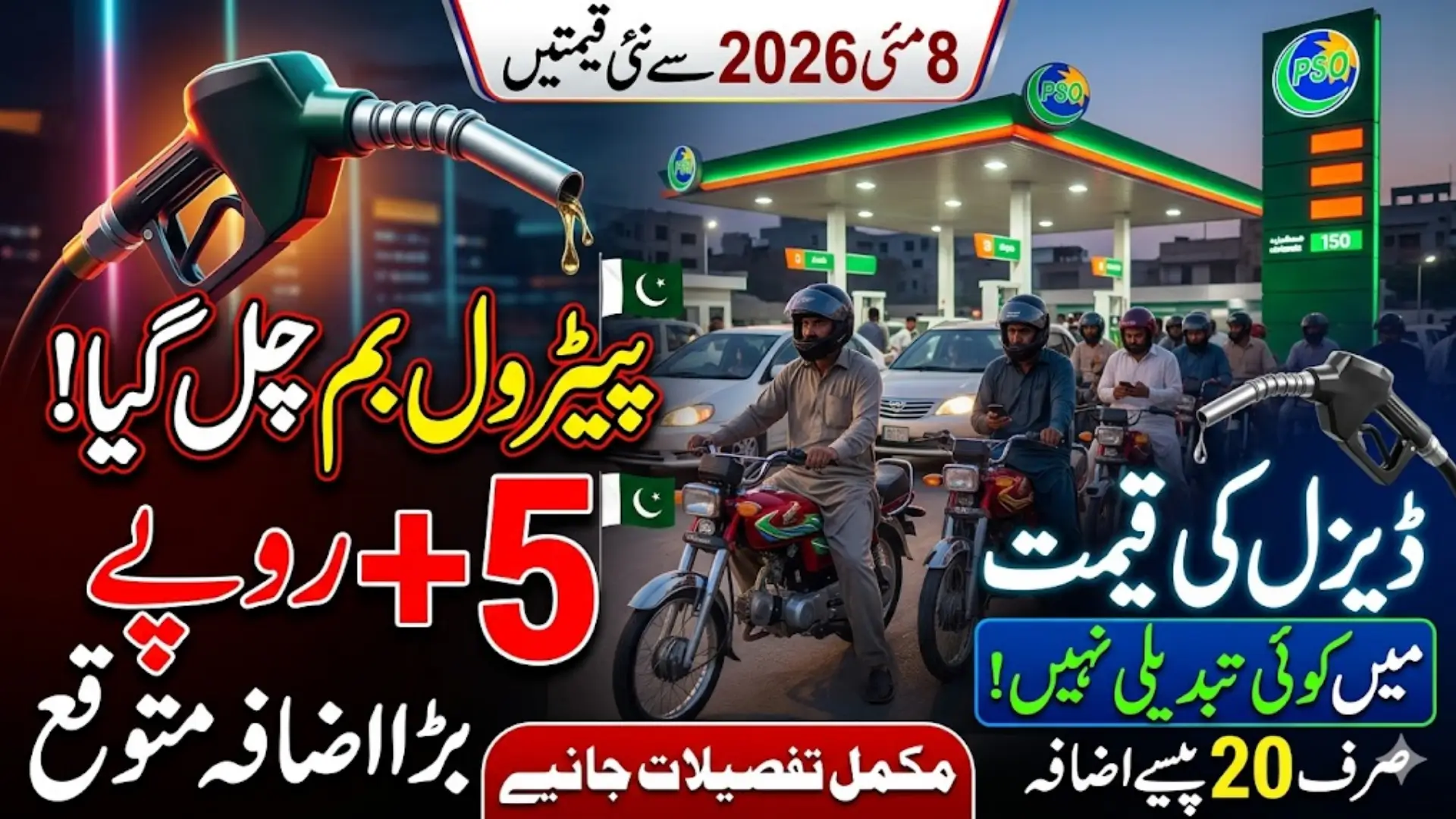
Petrol Price Today are once again expected to increase in the upcoming fuel price review. According to the latest estimates from the oil industry, the government may raise petrol prices by Rs. 4.75 per litre from 8 May 2026, while high-speed diesel prices are likely to remain almost unchanged.
For millions of Pakistanis, petrol prices directly affect daily life. From motorcycle riders and car owners to transporters and shopkeepers, everyone feels the impact whenever fuel prices change. This time, the expected increase is mainly linked to rising international oil prices, while government policy adjustments may help keep diesel rates stable.
Petrol Prices Likely to Increase From 8 May 2026
The latest industry calculations show that petrol prices may rise significantly in the next pricing cycle. Petrol is expected to move from Rs. 270.03 per litre to around Rs. 274.77 per litre. This means consumers may have to pay almost Rs. 5 extra on every litre.
For ordinary citizens, this increase may look small on paper, but in reality, it can affect monthly household budgets. People who travel daily on motorcycles or cars may feel the pressure immediately, especially in cities where fuel consumption is already high.
Many Pakistanis were hoping for relief after recent fluctuations in global oil markets, but the fresh increase in international gasoline prices has reduced those chances. Industry officials believe that unless the government provides relief through taxes or petroleum levy adjustments, consumers will likely face higher petrol costs from Thursday.
Expected Fuel Prices in Pakistan
| Fuel Type | Current Price | Expected Price | Expected Increase |
|---|---|---|---|
| Petrol | Rs. 270.03 | Rs. 274.77 | Rs. 4.75 |
| High-Speed Diesel | Rs. 334.74 | Rs. 334.93 | Rs. 0.20 |
Main Reason Behind Petrol Price Increase
The biggest reason behind the expected petrol price hike is the increase in international Free on Board (FOB) prices. During the review period, global gasoline prices increased from $139.03 per barrel to $143.01 per barrel.
Pakistan depends heavily on imported petroleum products, so any increase in global oil prices quickly affects local fuel rates. Even though there was some reduction in premiums and incidental charges, it was not enough to fully control the rising cost.
Another important factor is the removal of a previous Pakistan State Oil adjustment worth Rs. 1.41 per litre. This adjustment earlier helped reduce pressure on consumers, but now its removal has added to the expected increase.
Some key reasons behind the petrol price hike include:
- Increase in global gasoline prices
- Higher international FOB rates
- Removal of PSO adjustment
- Limited relief from reduced premiums
- Dependence on imported fuel
Diesel Prices Expected to Remain Stable
Unlike petrol, high-speed diesel may see only a very small increase of around Rs. 0.20 per litre. According to estimates, diesel prices may move from Rs. 334.74 to Rs. 334.93 per litre.
This stability is surprising because international diesel prices also increased sharply during the review period. Global diesel FOB prices reportedly rose from $160.41 per barrel to $172.99 per barrel. Normally, such a big jump would increase local diesel rates significantly.
However, this time the government’s policy measures and lower customs duties helped control the overall impact. Industry estimates show that customs duty declined by more than Rs. 20 per litre, which balanced most of the increase coming from international markets.
Why Diesel Prices Stayed Almost Unchanged
| Factor | Impact on Diesel Price |
|---|---|
| Increase in global diesel prices | Increased pressure on prices |
| Reduction in customs duty | Helped reduce final cost |
| Lower incidental charges | Controlled overall increase |
| Stable exchange rate | Limited pricing impact |
International Oil Market Continues to Affect Pakistan
Pakistan’s fuel prices are directly linked with international oil markets. Whenever crude oil or refined petroleum prices rise globally, local consumers also face higher prices at petrol pumps.
In recent weeks, international gasoline prices have remained volatile due to changing global demand and supply conditions. Oil-producing countries, shipping costs, and international economic uncertainty all play an important role in fuel pricing.
Because Pakistan imports a large portion of its petroleum products, the country has little control over global market trends. This is why even small changes in international prices can affect local consumers.
Many transport businesses in Pakistan are already worried about rising operational costs. Public transport operators, delivery services, and logistics companies may eventually pass these additional costs on to consumers through higher fares and prices.
Exchange Rate Stability Gave Some Relief
One positive factor during this pricing review was the relatively stable exchange rate. The Pakistani rupee reportedly remained around Rs. 278.9 against the US dollar during the review period.
If the rupee had weakened further, fuel prices could have increased even more. Since petroleum imports are paid in dollars, any sharp movement in the exchange rate directly affects fuel costs in Pakistan.
Although the stable rupee provided some support, it was still not enough to fully offset the increase caused by higher international oil prices.
A stable exchange rate helps in several ways:
- Reduces pressure on import costs
- Controls sudden fuel price spikes
- Helps maintain market confidence
- Supports overall economic stability
Impact of Petrol Price Increase on Common Citizens
Whenever petrol prices increase, the effects are felt across almost every sector of life in Pakistan. Transportation costs rise first, followed by increases in food prices, delivery charges, and travel expenses.
Motorcycle riders, office workers, students, and ride-hailing drivers are among the people most affected. For families already managing tight monthly budgets, even a small fuel increase creates additional financial pressure.
In many cities, people have already started reducing unnecessary travel because fuel expenses continue to rise. Small business owners also worry that higher transportation costs may reduce profits.
The expected increase may also affect:
- Public transport fares
- School van charges
- Online delivery service costs
- Prices of vegetables and goods
- Daily commuting expenses
Government’s Final Decision Still Awaited
Although industry estimates strongly suggest an increase in petrol prices, the final decision will be made by the government during the official fuel price announcement.
There is still a possibility that authorities may adjust petroleum levy rates or provide partial relief to consumers. In the past, the government has sometimes used tax adjustments to reduce the burden on the public.
However, experts believe that major relief may be difficult because Pakistan is already facing economic pressure and revenue challenges. Fuel taxes remain an important source of government income.
Consumers are now waiting for the official notification, which will confirm whether petrol prices will rise exactly as estimated or if any changes will be made at the last moment.
What Consumers Should Expect in the Coming Days
Fuel prices in Pakistan are likely to remain sensitive to international market trends in the coming weeks. If global oil prices continue to rise, local petrol prices may also increase further in future reviews.
Citizens may need to prepare for higher transportation and travel costs during the coming months. Many experts are advising people to use fuel carefully and avoid unnecessary travel where possible.
For transport businesses and commercial users, fuel management may become even more important as operating costs continue to increase.
Consumers should keep an eye on:
- International oil market changes
- Government petroleum levy decisions
- Dollar exchange rate movements
- Official fuel price announcements
- Economic policy updates
Conclusion
Petrol prices in Pakistan are expected to increase by Rs. 4.75 per litre from 8 May 2026, mainly due to rising international gasoline prices and adjustments in industry pricing calculations. Meanwhile, high-speed diesel prices are likely to remain mostly stable because reductions in customs duty helped balance the increase in global diesel rates.
For ordinary Pakistanis, this expected increase may add further pressure on household budgets and transportation expenses. While the exchange rate remained stable during the review period, global oil prices continue to play the biggest role in determining local fuel costs.